Write and revise academic chapters faster without losing rigor.
Draft from your sources with inline autocomplete and style controls tuned for academic writing, run Deep Edit for structural rewrites, apply section-level changes only where feedback lands, and use automatic review plus advanced proofreading before submission inside a Word-like editor.
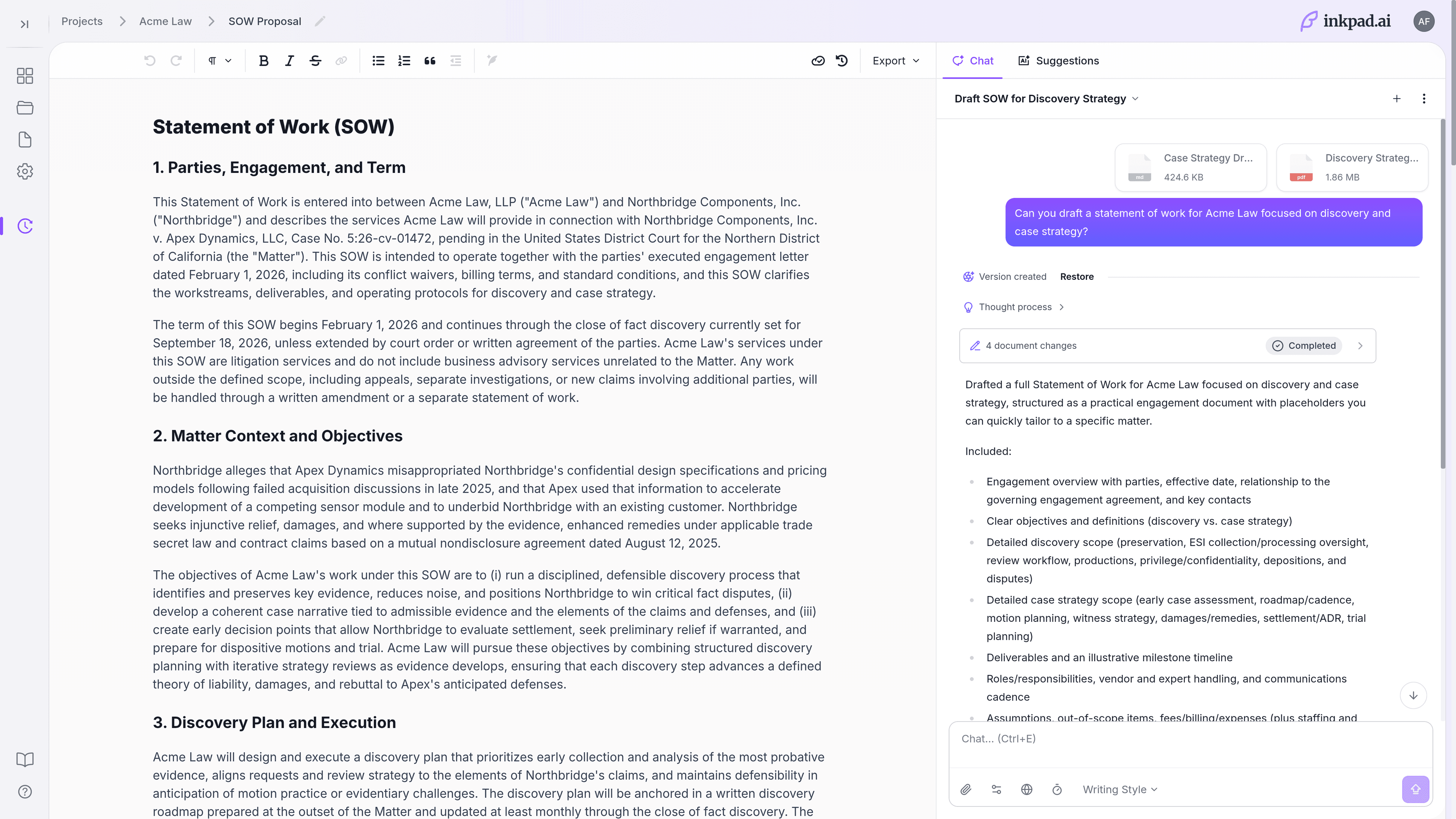
Combine papers, notes, and web research with citations so every section stays evidence-based.
Use style customization and inline autocomplete so drafts stay formal, clear, and discipline-aware.
Apply Deep Edit and range edits only where comments land, then restore any prior version if needed.
Theses and policy drafts stall for predictable reasons.
Inkpad.ai removes the friction that adds rewrite weeks: stalled first drafts, disconnected sources, risky chapter rewrites, and quality issues caught too late.
Start from your source material, then use inline autocomplete to keep momentum sentence by sentence.
Run web research with citations and save sources so argument support stays attached to the draft.
Use range editing and Deep Edit for targeted rewrites while preserving approved sections and structure.
Run automatic review suggestions and advanced proofreading before export for advisor and committee rounds.
Three workflows for chapter-scale writing and revision.
Keep argument quality high while reducing effort across drafting, evidence gathering, and advisor revisions.
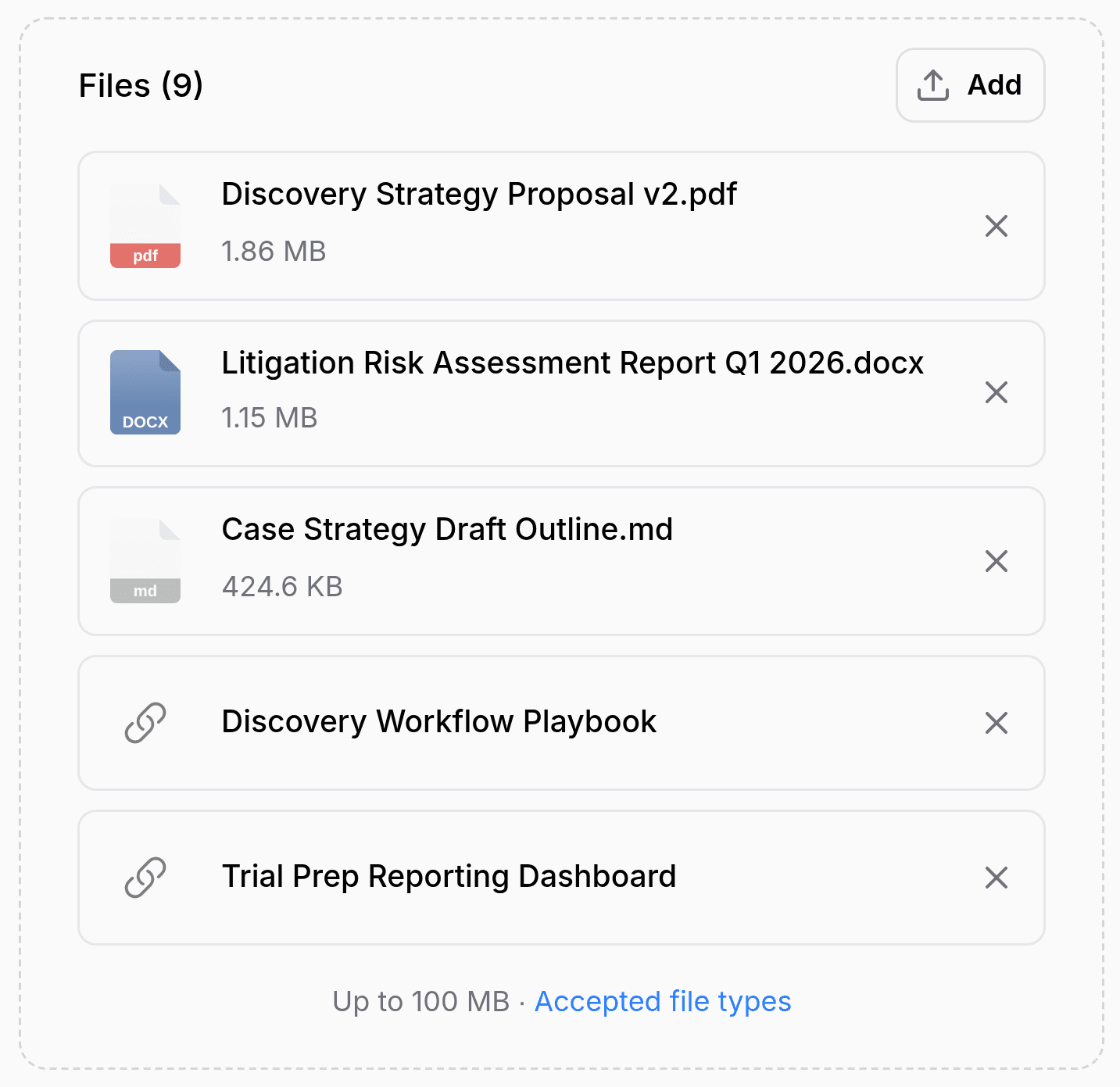
Draft from sources and keep citations connected
Attach notes, prior drafts, and references, then run web research with citations so claims stay grounded while you write.
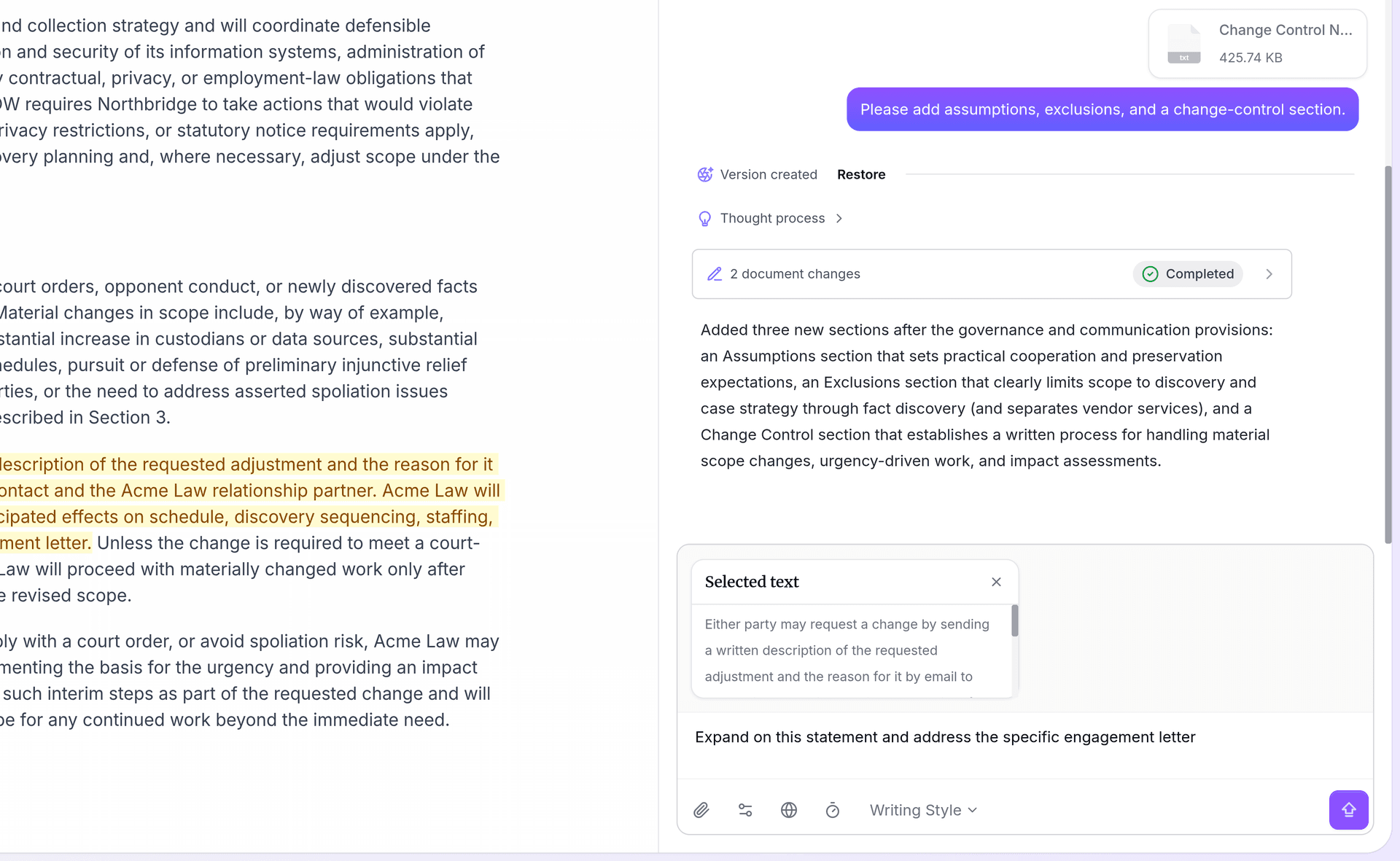
Apply Deep Edit only where feedback lands
Highlight one section for multi-pass structure, clarity, and tone updates without destabilizing approved chapters.
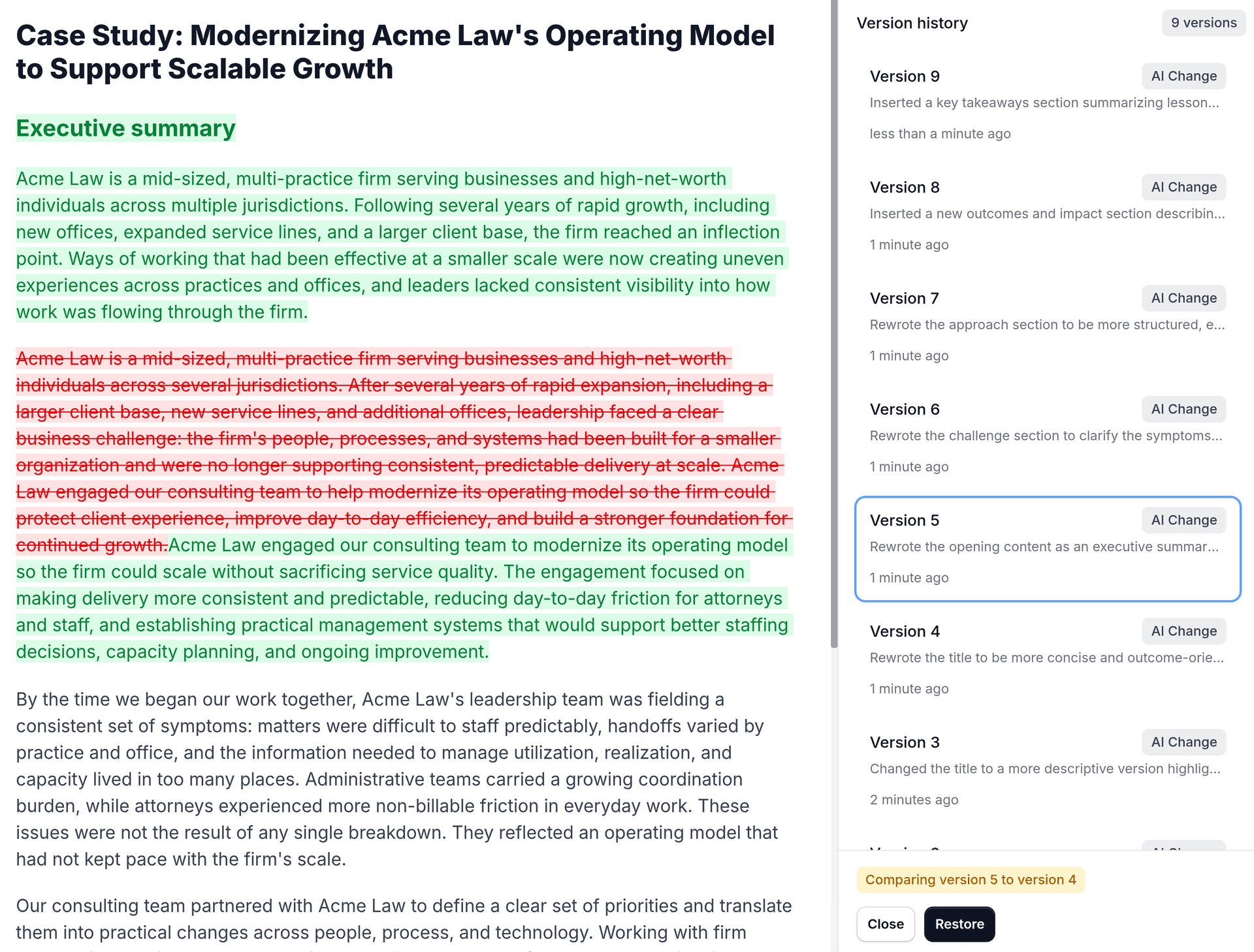
Run review and proofreading before submission
Use automatic review suggestions and advanced proofreading, then compare versions and restore any previous state if needed.
Built for every role that owns long-form analysis and academic output.
Use one writing workspace across research, drafting, and review, whether you are writing for a thesis committee, internal policy team, or grant reviewer.
Move from chapter outline to polished thesis sections while preserving your personal writing voice.
Pain solved: thesis progress stalls between meetings.
Turn source notes and article summaries into coherent literature review drafts with cleaner structure.
Pain solved: disconnected notes never become usable prose.
Draft evidence-backed memos quickly, then tighten sections under stakeholder review without full rewrites.
Pain solved: slow turnaround on high-stakes policy writing.
Build persuasive narratives from prior applications and project context while keeping revision history intact.
Pain solved: repetitive rewriting under tight deadlines.
Move from rough draft to committee-ready handoff in one editor.
Keep drafting, review, and revision in one long-form workflow, then export clean files for supervisors, reviewers, and institutions.
Review-Ready Workflow
Project knowledge: Attach papers, notes, links, and web citations so every chapter section stays evidence-backed.
Advisor feedback rounds: Use Deep Edit and range edits on reviewed passages while preserving the rest of your chapter.
Review + proofreading: Run automatic review and advanced proofreading before each submission handoff.
Export Formats
Microsoft Word: Advisor reviews and institutional submissions.
PDF: Final committee packets and archived drafts.
Markdown: Research repos and collaborative drafting pipelines.
OpenDocument: Interoperability beyond Microsoft-first workflows.
Keep academic tone consistent across long chapters
Tune style behavior and inline autocomplete so writing stays formal and coherent from introduction through conclusion.
Handle advisor rounds with controlled Deep Edit
Apply range edits and Deep Edit to commented sections, then restore prior versions when review direction shifts.
Work on unpublished research with privacy controls
Workspace data remains private and is not used to train foundation models while you draft and revise.
Questions from graduate students, RAs, and policy writers
Finish your next chapter with less rewrite risk.
Import your draft or start from scratch, then run source-backed drafting, review, proofreading, and export in one academic workflow.